


Markets consolidate on the eve of the US mid-terms
GAS
The results of tomorrow’s mid-term elections will mark a turning point for the Trump Administration, and maybe for all of us – if the Republicans lose both houses, Trump will likely spend the next two years being subject to numerous congressional investigations, and his protectionist agenda will inevitably suffer an unrecoverable blow.
On the other hand, if the Republicans hold onto the Senate, we’re all in for a rough ride until at least 2029.
Whilst markets have started the week on a marginally bearish note, it’s most likely just profit-taking on the part of speculators as they reposition themselves for what comes next – will the US relaunch military strikes on Iran? Or will we see diplomatic progress with a view to ending the conflict?
Suffice as to say, if the Republicans don’t get the trouncing that has been heavily trailed this last few weeks, Trump is unlikely to soften his approach.
Prices remain at or around four-year highs, supported by a tight winter supply outlook, low European storage levels and continued disruption risks across the Middle East – a reported strike on an LNG tanker in the Persian Gulf yesterday only serves to reiterate the relentless vulnerability of global LNG supply transit.
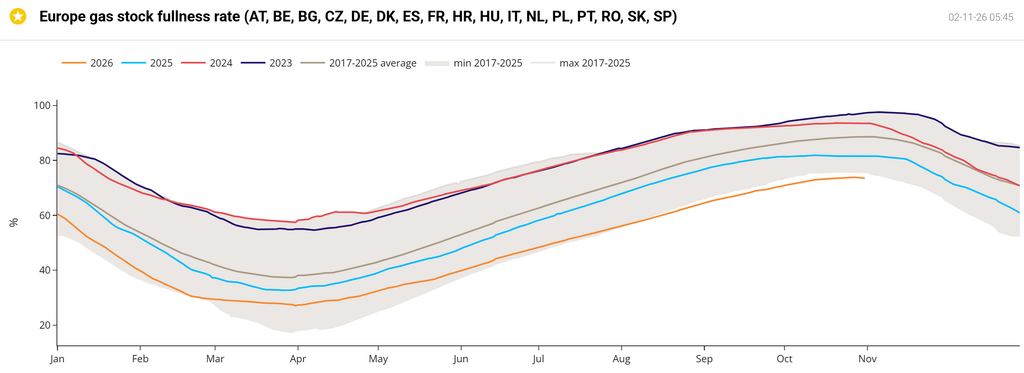
European storage fullness is at 73% versus the 8-year average of 89%, with stocks now threatening to roll over into net withdrawal – so, the heating season is well and truly upon us:
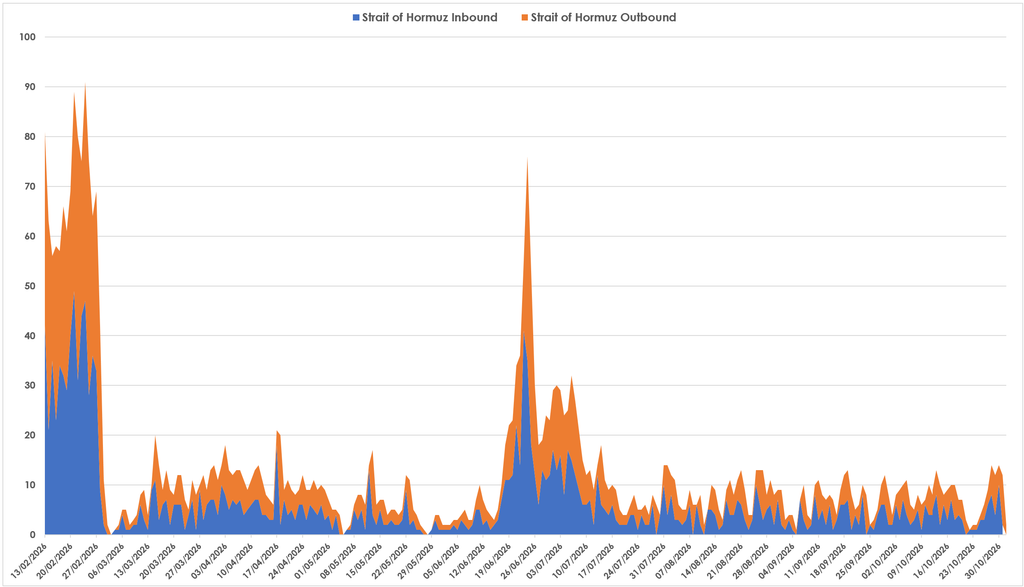
Transit numbers across the Strait of Hormuz remain on the floor following two failed peace agreements in Apr ’26, then Jun ’26:
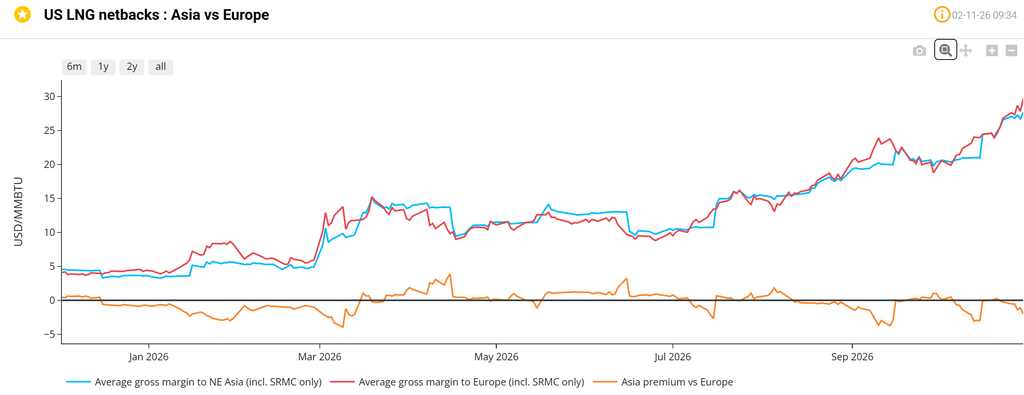
And so, with Asia’s LNG supply routes still closed for business, the battle with Europe for US LNG cargoes continues to heat up:
October’s Monthly Day-Ahead Average finished at 210p/therm (or 7.15p/kwh exc non-gas).
November’s Monthly Day-Ahead Average has started at an eye-watering 250p/therm (or 8.5p/kwh exc non-gas):
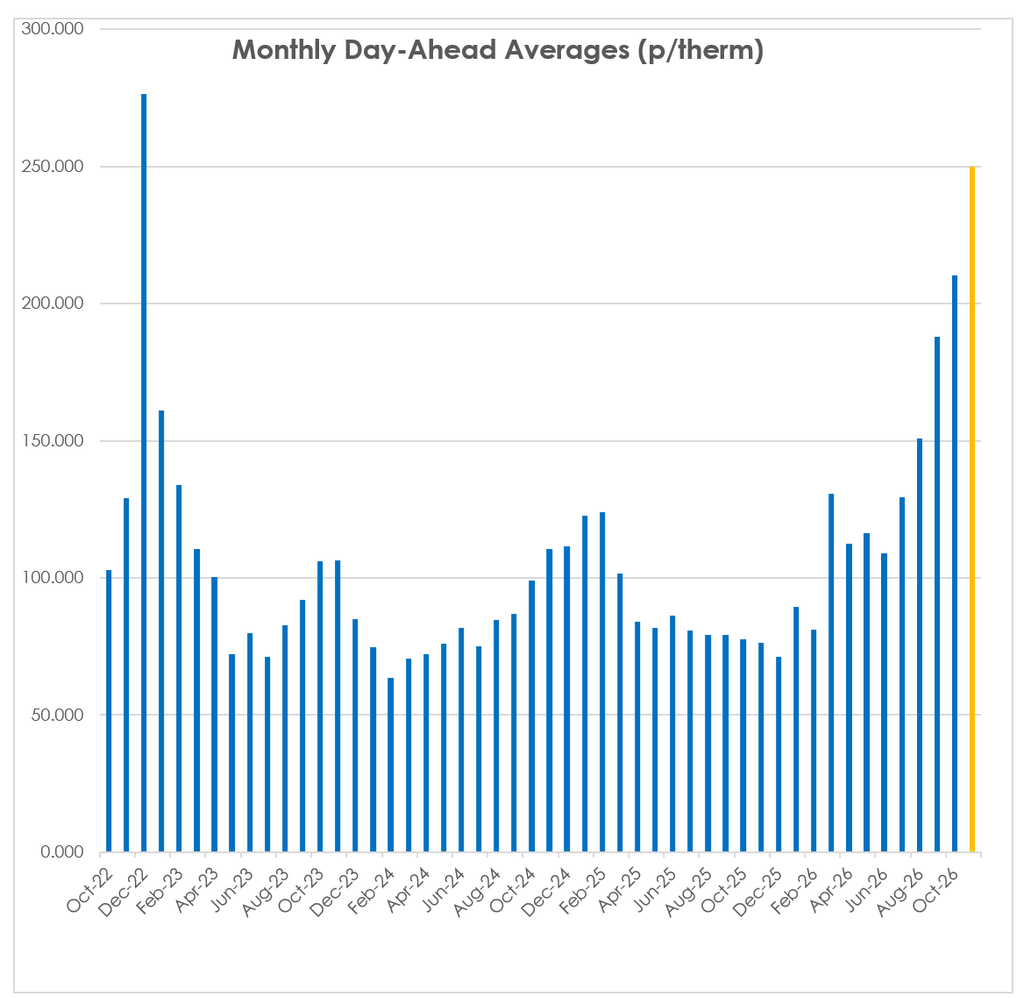
It’s worth noting that even at it’s height in Dec ’22, the crisis caused by Russian invasion of Ukraine (and the closure of the Nordstream pipeline) only resulted in a Monthly Day-Ahead Average high of 276p/therm (or 9.4p/kwh exc non-gas) – but back then, Industrial & Commercial consumers were protected by the EBRS subsidy (which meant most heavy consumers didn’t pay above 219p/therm (or 7.5p/kwh).
For now, with European/UK debt-to-GDP ratios at historical highs, and with bonds selling off (and yields rising), governments are powerless to help out in any meaningful way – as such, Industrials across Europe/the UK will likely be facing the full force of this energy crisis over the coming months, unless, by some miracle, the Strait of Hormuz can re-open.
ELECTRICITY & CARBON
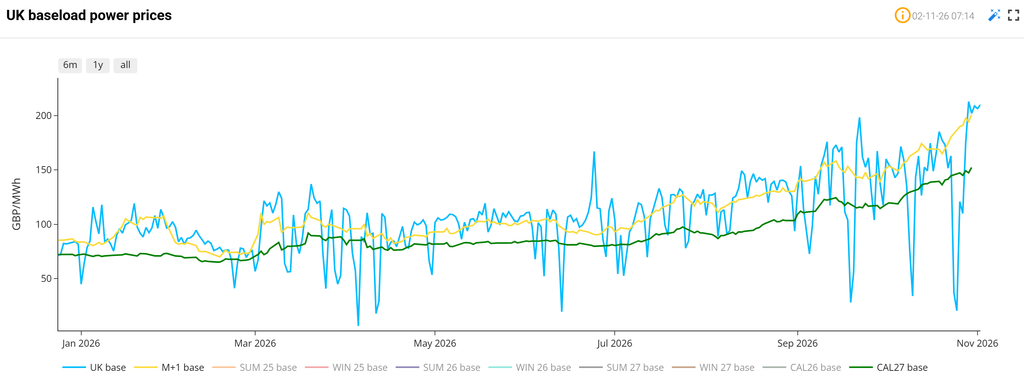
As the crisis has deepened over the past couple of months, UK electricity Month-Ahead and CAL-27 prices have been dragged northwards, and Day-Ahead peaks and troughs have become more pronounced, reflecting a panicked market:
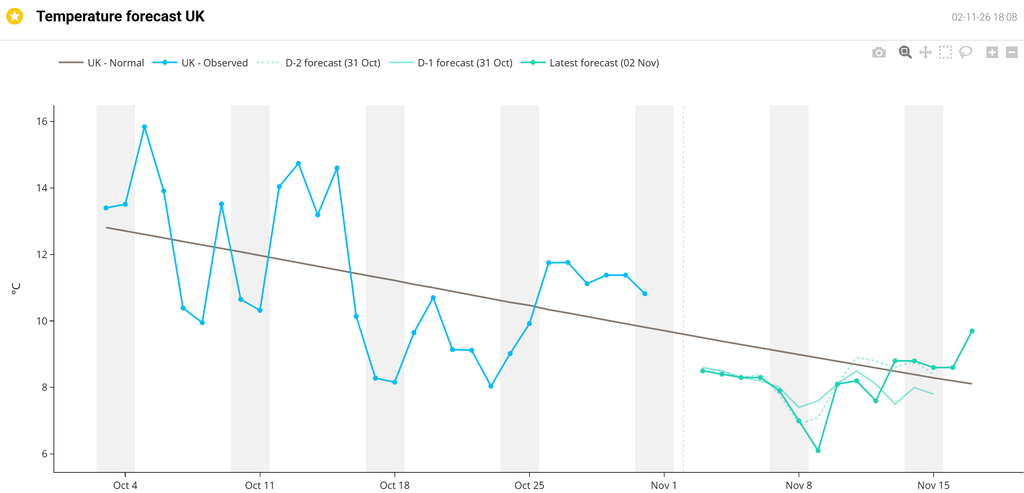
Thankfully, temperatures are expected to rise above seasonal norms come mid-November – which should keep a lid on gas-for-power burn:
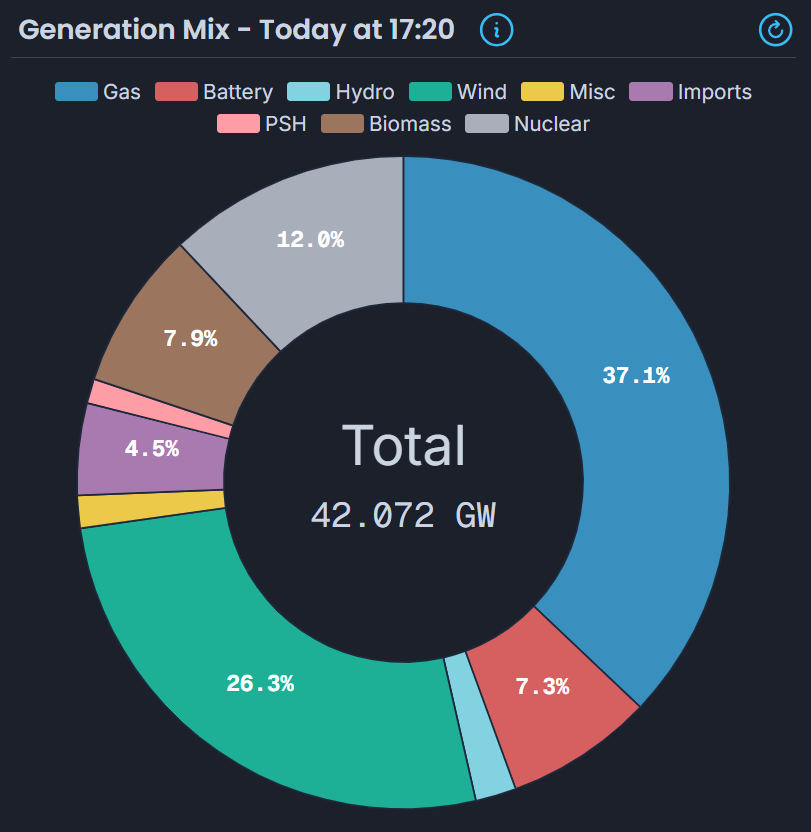
However, at the time of writing, given low temperatures and poor renewables outputs, the lion’s share of our electricity generation is gas-fired:
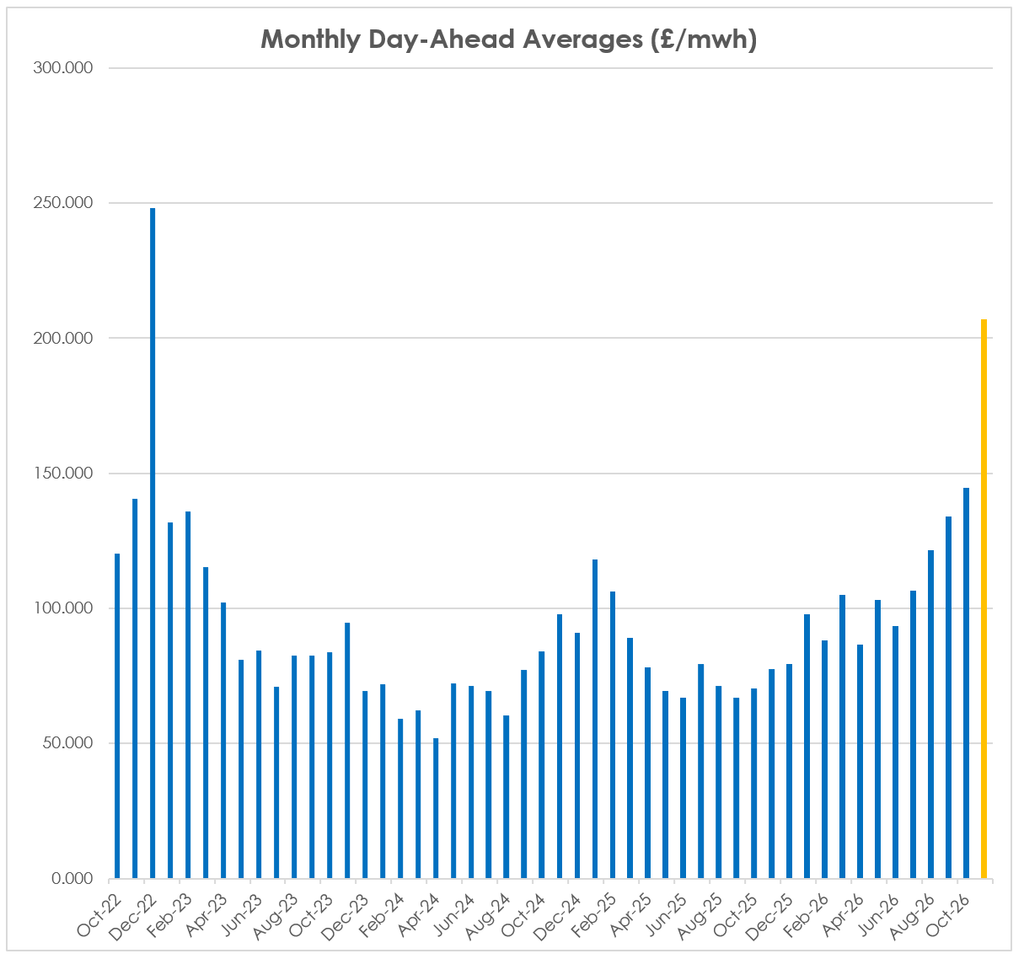
October’s Monthly Day-Ahead Average finished at £145/mwh (or 14.5p/kwh exc non-energy).
November’s Monthly Day-Ahead Average so far is mirroring gas, and is posting an unsettling 207p/therm (or 20.7p/kwh exc non-energy):
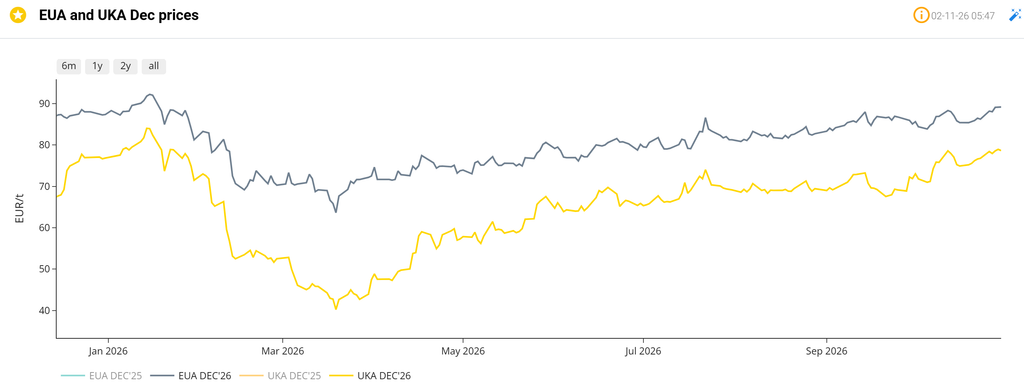
On the Carbon side of things, mid-price Dec-26 UKA delivery sits at at £66.37/tn (and the spot is at mid 65s) – with UK CBAM imminent for Jan ’27, EUA/UKA linkage looks nailed-on (which means, as the significantly less liquid market, UKAs are rising to parity):